
Table of Contents
- Overview of Petroleum Export Licensing in Nigeria
- Regulatory Authorities & Legal Framework
- Types of Licenses Required for Export
- Eligibility Criteria
- Requirements & Documentation (Table)
- Step-by-Step Application Process
- Export Permit Workflow (Technical Process)
- Costs & Fees Breakdown
- Timeline & Approval Duration
- Compliance & Operational Obligations
- Common Mistakes to Avoid
- FAQs (People Also Ask)
- Misconceptions About Petroleum Export Licensing
- Final Expert Insights
1. Overview of Petroleum Export Licensing in Nigeria
Exporting refined petroleum products in Nigeria is controlled to ensure:
- Product quality compliance
- Revenue tracking
- Environmental & safety standards
- Accurate measurement of exported volumes
Under current regulations, export activities are tracked per shipment and per quarter, not just via a one-time license.
According to NMDPRA guidelines, companies must:
- Apply for export permits quarterly
- Obtain approvals through the IMPEX portal
- Secure vessel clearance and cargo documentation
2. Regulatory Authorities & Legal Framework
Key Regulators
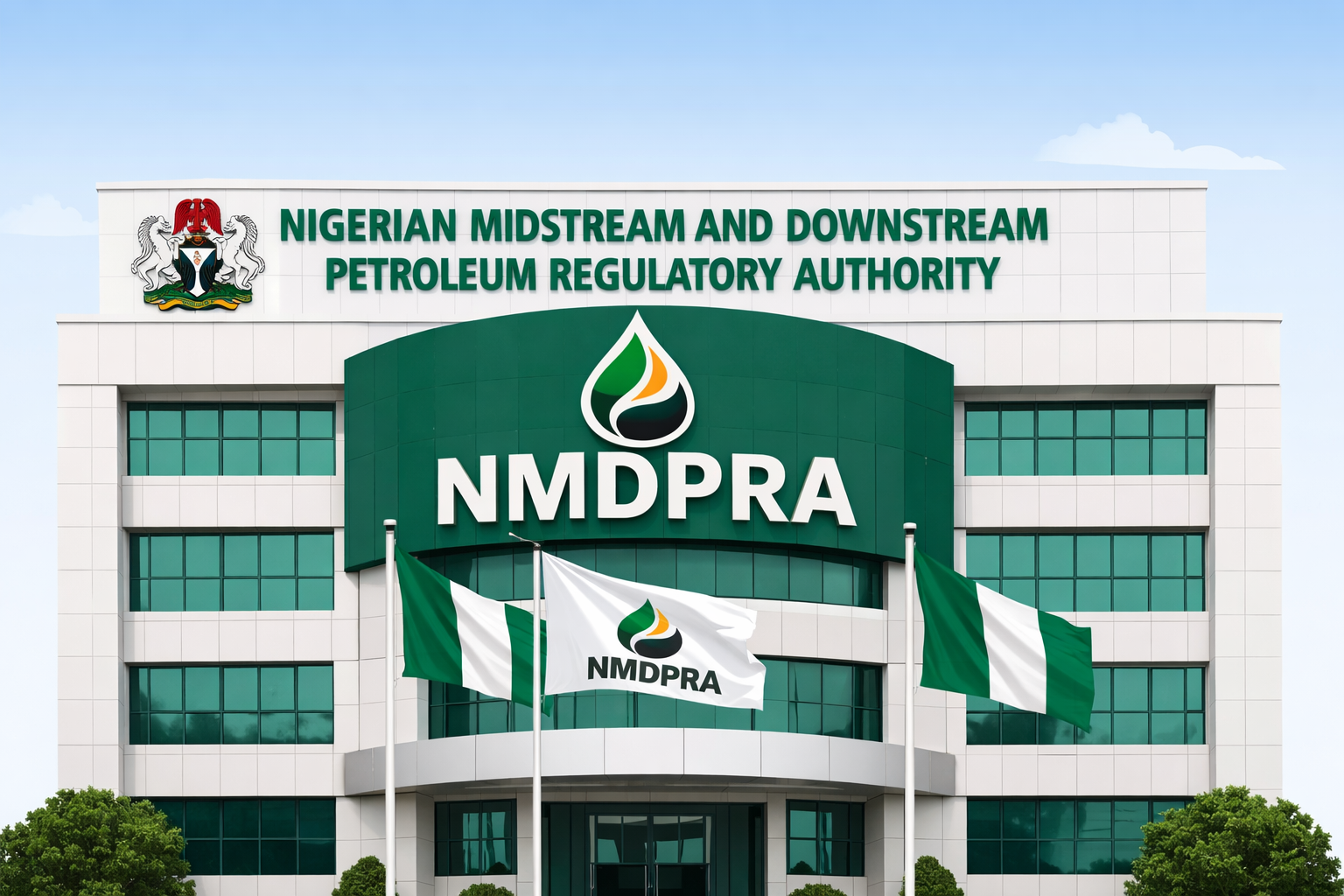
1. Nigerian Midstream and Downstream Petroleum Regulatory Authority (NMDPRA)
Primary regulator responsible for:
- Licensing
- Export permits
- Product quality and measurement
- Facility compliance
2. Federal Ministry of Industry, Trade & Investment (FMITI)
- Issues final export permit approval after NMDPRA review
3. Nigerian Upstream Petroleum Regulatory Commission (NUPRC)
- Issues COQ (for some export operations)
Legal Framework
Export licensing is governed by:
- Petroleum Industry Act (PIA) 2021
- Midstream & Downstream Petroleum Regulations
- NMDPRA Export & Supply Guidelines
3. Types of Licenses Required for Export
You need a combination of licenses, not just one.
| License / Permit | Purpose | Issuing Authority |
|---|---|---|
| Wholesale Petroleum Liquids Supply License (WPLSL) | Allows trading/export operations | NMDPRA |
| Export/Evacuation Permit | Authorises actual export shipment | NMDPRA → FMITI |
| IMPEX Permit | Online processing & documentation | NMDPRA |
| Certificate of Quantity (COQ) | Confirms volume exported | NMDPRA/NUPRC |
| Certificate of Quality | Confirms product meets standards | NMDPRA |
Export cannot happen without all of the above combined.
4. Eligibility Criteria
To qualify for petroleum export licensing in Nigeria, your company must:
Corporate Requirements
- Be registered with CAC
- Operate within the downstream/midstream sector
- Maintain proper corporate governance
Technical Requirements
- Access to refinery or licensed supplier
- Storage facility or depot agreement
- Logistics capability (vessels, trucking, etc.)
Financial Requirements
- Proven financial capacity
- Bank reference letter confirming capability
Regulatory Requirements
- Tax Clearance Certificate (3 years)
- Compliance with HSSE standards
5. Requirements & Documentation (Full Table)
Below are the core documents required based on NMDPRA portal guidelines:
| Requirement | Details |
|---|---|
| Certificate of Incorporation | CAC registration documents |
| Tax Clearance Certificate | Minimum of 3 years |
| Bank Reference Letter | Confirming financial capability |
| Evidence of Product Source | Refinery or supply agreement |
| Storage License / Agreement | Approved depot or tank farm |
| HSSE Documents | Safety and environmental compliance |
| Technical Capability | Staff CVs and operational experience |
| Application Letter | Formal request for permit |
| Vessel & Logistics Info | For shipment approval |
| Previous Transaction Records | Required for renewals |
These are uploaded through the NMDPRA portal during application
6. Step-by-Step Process to Obtain a Petroleum Export License
Step 1: Company Incorporation & Readiness
- Register company with CAC
- Set up operational structure
- Secure storage or refinery agreement
Step 2: Register on NMDPRA Licensing Portal
You must create an account on:
- NMDPRA CELPS / IMPEX portal
This is mandatory for all applications
Step 3: Apply for Wholesale Petroleum Liquids Supply License
This license allows:
- Buying
- Selling
- Exporting petroleum liquids
Without this, export is illegal.
Step 4: Apply for Export Permit (Quarterly)
Export permits are not permanent.
- Must be applied for every quarter
- Covers volume and shipment plan
“Application for export permit shall be submitted on a quarterly basis”
Step 5: Submit Application via IMPEX Portal
- Select export category
- Enter product details
- Upload documents
Step 6: Pay Application Fees
- Payment via Remita
- Fees depend on volume and product type
Step 7: NMDPRA Review & Inspection
The regulator will:
- Review documents
- Assess compliance
- Possibly inspect facilities
Step 8: Forwarding to FMITI
Once approved:
- Application is sent to FMITI
- Export permit is issued
“Application shall be forwarded to FMITI for issuance of export permit”
Step 9: Obtain COQ & Shipping Documents
Before export, you must provide:
- Certificate of Quantity
- Certificate of Quality
- Bill of Lading
- Cargo manifest
Step 10: Vessel Clearance & Export Execution
You must submit:
- Tanker details
- Loading schedule
- Cargo specifications
Required vessel data includes:
- IMO number
- Quantity loaded
- Destination
- Vessel owner
7. Export Workflow (Operational Process)
Here’s how export actually happens:
- Apply for export permit
- Submit tanker schedule
- Get NMDPRA clearance
- Load product
- Obtain COQ
- Final clearance
- Vessel departs
8. Costs & Fees Breakdown
Important: Fees are not fixed publicly and depend on:
- Product type
- Volume
- License category
Typical Cost Components
| Cost Type | Description |
|---|---|
| Application Fee | Non-refundable |
| Processing Fee | Based on permit |
| License Fee | WPLSL cost |
| Vessel Clearance Fee | Per shipment |
| Documentation Cost | COQ, quality checks |
All payments are made electronically via NMDPRA systems
9. Timeline for Approval
| Stage | Duration |
|---|---|
| Portal Registration | 1–2 days |
| Document Preparation | 1–3 weeks |
| Review & Approval | 2–6 weeks |
| Export Permit Issuance | 1–2 weeks |
Total timeline: 4–10 weeks
10. Compliance & Operational Obligations
Once licensed, you must:
- Submit regular reports to NMDPRA
- Track volumes exported
- Maintain HSSE compliance
- Follow measurement standards
Exporters must also:
- Maintain full shipping documentation
- Adhere to product quality standards
- Submit tanker schedules monthly
11. Common Mistakes to Avoid
1. Thinking one license is enough
You need multiple approvals.
2. No storage facility
This is a major rejection factor.
3. Weak financial documentation
Bank reference must be strong.
4. Incomplete documentation
Most delays happen here.
5. Ignoring quarterly permits
Export approval is not permanent.
12. Frequently Asked Questions (People Also Ask)
1. What license is required to export petroleum products in Nigeria?
You need:
- Wholesale Petroleum Liquids Supply License
- Export Permit
- COQ and quality certification
2. Can a foreign company export petroleum products?
No. Only Nigerian-registered companies can apply.
3. How long does it take to get approval?
Typically 4–10 weeks, depending on compliance.
4. Is export permit permanent?
No. It is issued quarterly.
5. Do I need a refinery?
No, but you need:
- Supply agreement
- Licensed depot or storage facility
6. Can I apply online?
Yes. All applications are processed via:
- NMDPRA portals
7. What happens without a license?
You risk:
- Seizure of cargo
- Fines
- Criminal liability
13. Common Misconceptions
“There is one export license”
Reality: Multiple approvals required
“Once approved, you can export anytime”
Reality: Permits are quarterly and shipment-based
“You don’t need storage”
Reality: Storage access is mandatory
“Process is manual”
Reality: Fully digital via NMDPRA portals
14. Expert Insights (What Most People Don’t Know)
- Export is tracked per vessel and cargo
- Government monitors:
- Quantity
- Quality
- Destination
- You must submit advance tanker schedule monthly
- Measurement discrepancies can stop export clearance
Conclusion
Obtaining a petroleum export license in Nigeria is not a one-step process, it is a structured regulatory system involving multiple approvals, technical compliance, and continuous monitoring.
To succeed, you must:
- Get the right licenses (WPLSL + Export Permit)
- Use the NMDPRA IMPEX portal correctly
- Maintain strong documentation
- Ensure full compliance with export procedures
If done properly, this positions your company to operate legally in Nigeria’s multi-billion-dollar petroleum export market.

