
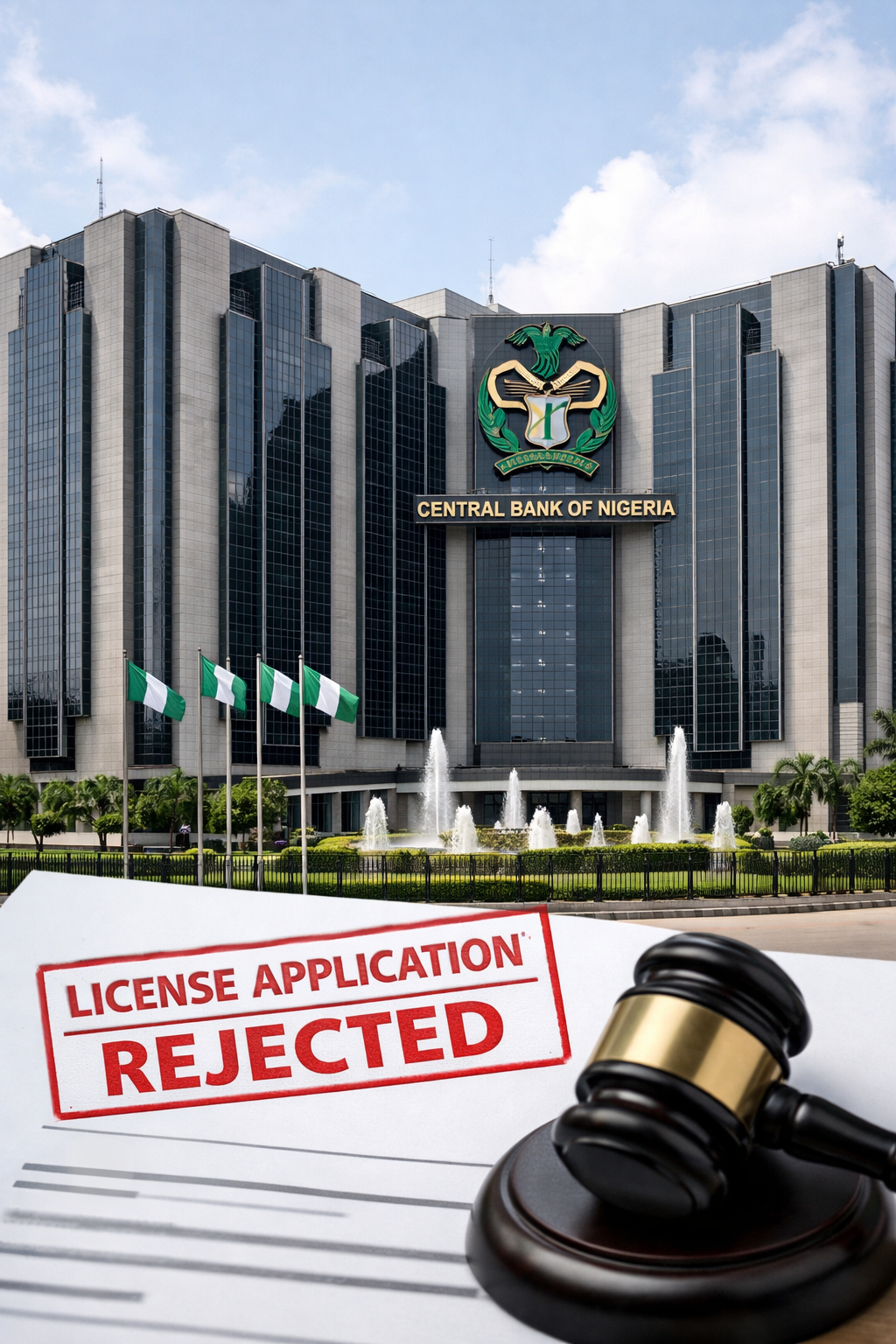
Introduction: The Illusion of “Just Another Fintech License”
Nigeria’s fintech ecosystem is booming, and Mobile Money Operator (MMO) licenses sit at the centre of that growth. On paper, the process appears structured, documented, and achievable. The guidelines are publicly available. The requirements are listed. The fees are stated.
Yet, in practice, a significant number of MMO license applications stall, fail, or never progress beyond preliminary review.
Why?
Because most applicants underestimate three things:
- The depth of regulatory scrutiny by the Central Bank of Nigeria (CBN)
- The technical and operational sophistication required
- The compliance architecture expected before approval, not after
This article breaks down the real reasons MMO license applications fail in Nigeria, based strictly on regulatory expectations published by the Central Bank of Nigeria (CBN), while exposing the mistakes, risks, hidden complexities, rejection triggers, timelines, and strategic blind spots.
By the end, one thing will be clear:
This is not a license you “try your luck” with.
Understanding the MMO License Framework in Nigeria
A Mobile Money Operator (MMO) license is issued by the Central Bank of Nigeria (CBN) under its regulatory framework for mobile payments services.
According to the CBN guidelines:
- MMO licenses enable companies to provide mobile payment services, including wallet creation, transfers, bill payments, and agent network operations.
- Applicants must meet strict financial, technical, and governance standards.
- The process involves multiple regulatory layers, not just document submission.
Key Regulatory Structure (From CBN Guidelines)
The application process generally involves:
- Approval-in-Principle (AIP)
- Final License Approval
Each stage has its own requirements, documentation, and verification process.
Section 1: The Most Common Mistakes That Kill MMO Applications
1. Applying Without Understanding the Full Regulatory Scope
Many applicants assume the MMO license is similar to other fintech licenses. It is not.
The CBN requires:
- A fully developed operational model
- A robust agent network strategy
- A technology platform that meets regulatory standards
Mistake: Submitting a conceptual business idea instead of a regulator-ready business structure.
Impact: Immediate rejection or indefinite delay at the AIP stage.
2. Weak or Incomplete Business Plan
The CBN requires a detailed feasibility study and business plan, including:
- Market analysis
- Revenue model
- Risk management framework
- Operational structure
What applicants do wrong:
- Submit generic or recycled business plans
- Fail to demonstrate financial sustainability
- Ignore risk mitigation strategies
Reality:
The business plan is not a formality, it is a regulatory test of competence.
3. Inadequate Capital Structure
CBN mandates a minimum paid-up capital requirement for MMO licensing.
But here’s the hidden complexity:
- It’s not just about having the money
- It’s about proving the legitimacy, source, and structure of funds
Common errors:
- Unclear shareholder structure
- Undocumented source of funds
- Misalignment between capital and proposed operations
Risk:
Applications can be rejected or flagged for enhanced due diligence.
4. Poor Corporate Governance Setup
CBN requires:
- A competent Board of Directors
- Qualified management team
- Defined governance framework
Where applicants fail:
- Appointing directors without relevant experience
- Lack of independence in board structure
- Weak compliance oversight mechanisms
CBN’s Perspective:
If governance is weak at application stage, it signals future regulatory risk.
5. Technology Infrastructure That Doesn’t Meet Expectations
Applicants must demonstrate:
- Secure and scalable systems
- Data protection compliance
- Integration capability with financial systems
Mistake:
- Submitting vague or outsourced tech plans
- No clear system architecture
- No evidence of testing or readiness
Hidden Truth:
CBN evaluates whether your system can handle financial risk, not just transactions.
6. Ignoring AML/CFT Requirements
Anti-Money Laundering (AML) and Counter-Terrorism Financing (CFT) compliance is non-negotiable.
Applicants must provide:
- AML/CFT policies
- Customer due diligence procedures
- Transaction monitoring systems
Common failure:
- Copy-paste compliance policies
- No real implementation framework
Result:
Immediate regulatory red flags.
7. Underestimating Documentation Requirements
CBN requires extensive documentation, including:
- Certificate of incorporation
- Memorandum & Articles of Association
- Board resolutions
- Feasibility reports
- Technical agreements
Mistake:
- Missing documents
- Inconsistent information
- Poorly structured submissions
Impact:
Applications get delayed or rejected for being non-compliant.
Section 2: Hidden Complexities Most Applicants Never See
1. The “Pre-Submission Readiness” Requirement
The biggest misconception is that licensing begins with submission.
In reality:
Licensing begins long before submission
Applicants must already have:
- Operational frameworks
- Technology systems
- Governance structures
CBN is not licensing ideas, it is licensing readiness.
2. Regulatory Due Diligence Goes Beyond Documents
CBN conducts:
- Background checks on promoters
- Financial integrity verification
- Technical capability assessments
This means:
- Your history matters
- Your partners matter
- Your funding sources matter
3. Agent Network Requirement
MMOs are expected to build:
- A robust agent network
- Nationwide reach capability
Hidden difficulty:
Designing a scalable agent network that aligns with regulatory expectations is a project on its own.
4. Interoperability Expectations
CBN expects MMO systems to integrate with:
- Banks
- Payment switches
- Other financial institutions
This requires:
- Technical partnerships
- Infrastructure readiness
5. Ongoing Compliance Obligations
Approval is not the end.
MMOs must comply with:
- Reporting requirements
- System audits
- Regulatory inspections
Many applicants fail to plan for post-license compliance.
Section 3: Top Reasons MMO Applications Are Rejected
Based on CBN requirements, applications typically fail due to:
1. Failure to Meet Minimum Requirements
- Capital
- Documentation
- Governance
2. Inconsistent or Misleading Information
- Conflicting documents
- Unclear ownership structures
3. Weak Risk Management Framework
- No clear mitigation strategies
- Poor internal controls
4. Inadequate Technical Capacity
- Unproven systems
- No security framework
5. Non-Compliance with Regulatory Guidelines
- Ignoring specific CBN directives
- Misinterpreting requirements
6. Poor Presentation of Application
- Disorganised submission
- Lack of clarity
Section 4: Timelines: The Reality vs Expectation
Official Process (CBN Structure)
- Submission of application
- Review and evaluation
- Approval-in-Principle (AIP)
- Fulfillment of conditions
- Final license issuance
Reality Check
- There is no guaranteed timeline
- Delays occur due to:
- Incomplete submissions
- Regulatory queries
- Compliance gaps
Important Insight:
Every mistake adds weeks or months to the process.
Section 5: Strategic Approach to Avoid Failure
1. Treat the Process as a Regulatory Project
Not a business registration. Not a fintech launch.
A regulated financial system deployment
2. Build Before You Apply
- Governance structure
- Compliance framework
- Technology system
3. Align with CBN Expectations Early
Study:
- CBN guidelines
- Regulatory circulars
- Licensing frameworks
4. Ensure Financial Transparency
- Clear source of funds
- Structured capital
5. Develop a Real Compliance System
Not documents, systems
6. Prepare for Regulatory Questions
Every claim in your application must be:
- Verifiable
- Defensible
Section 6: Risks of Getting It Wrong
If your application fails:
- You lose time (months or years)
- You lose capital (non-refundable fees)
- You damage regulatory credibility
In some cases:
Future applications face greater scrutiny
Section 7: Common Misconceptions About MMO Licensing
Misconception 1: “Once I have capital, I’m qualified”
False.
Capital is only one component.
Misconception 2: “CBN will guide me through the process”
False.
CBN evaluates, it does not consult.
Misconception 3: “I can fix issues after approval”
False.
Most requirements must be met before approval.
Misconception 4: “It’s similar to other fintech licenses”
False.
MMO licensing is significantly more complex.
Frequently Asked Questions (FAQs)
1. How much is the MMO license fee in Nigeria?
The CBN specifies both application and licensing fees, which are non-refundable and subject to regulatory review. Applicants must confirm current fees directly from official CBN guidelines.
2. How long does it take to get an MMO license?
There is no fixed timeline. The process depends on:
- Completeness of application
- Regulatory review cycles
- Applicant readiness
3. Can a startup apply for an MMO license?
Yes, but only if it meets all regulatory requirements, including capital, governance, and technical infrastructure.
4. What is the minimum capital requirement?
CBN prescribes a minimum paid-up capital, which must be fully verifiable and compliant with regulatory standards.
5. What happens after Approval-in-Principle (AIP)?
Applicants must:
- Fulfill additional conditions
- Demonstrate operational readiness
Only then can the final license be issued.
6. Can I partner with another company to apply?
Yes, but:
- Ownership structure must be transparent
- All parties must pass regulatory checks
7. Why do most MMO applications fail?
Because applicants:
- Underestimate complexity
- Submit incomplete applications
- Fail to meet regulatory expectations
Final Thoughts: This Is Where Most Applicants Get It Wrong
The MMO license process in Nigeria is not difficult because the requirements are hidden.
It is difficult because:
The requirements are deeper than they appear
Most applicants:
- Read the guidelines
- Assume understanding
- Proceed prematurely
And that is where failure begins.
Closing Insight (Read This Twice)
If you think:
- “I’ll figure it out as I go”
- “We’ll fix things later”
- “It’s just documentation”
Then you are already on the path to rejection.
Because the CBN is not asking:
“Do you want to operate?”
It is asking:
“Are you already capable of operating; safely, securely, and compliantly?”
And if your application does not answer that convincingly,
It will not pass.

