Radioactive waste management is a highly regulated matter in Nigeria. Whether you operate a facility that uses radioactive materials, plan to manage waste from industrial, medical or research sources, or intend to establish a storage or disposal site, you must secure the appropriate permit or license from the Nigerian Nuclear Regulatory Authority (NNRA), the statutory body mandated to regulate nuclear safety and radiation protection in Nigeria.
This comprehensive guide walks you through each step of the process from start to finish, explains the documentation required, offers an overview of official fees and timelines, and answers the most frequently asked questions to ensure compliance.
Understanding the Regulatory Authority
In Nigeria, NNRA supervises all radioactive and nuclear safety matters. It was established under the Nuclear Safety and Radiation Protection Act to control the use, storage, transport and disposal of radioactive materials in the country.
NNRA’s mandate includes:
-
Regulating radioactive sources and practices involving radiation,
-
Ensuring protection of workers, public health and the environment,
-
Reviewing and issuing authorisations, licenses and permits for radioactive waste management, and
-
Enforcing safety standards and compliance inspections.
To obtain any radioactive waste management permit, you must apply through NNRA’s authorisation processes.
Types of Radioactive Waste Permits in Nigeria
While NNRA does not distinguish a single “waste permit” label, the following categories relate to radioactive waste management and disposal authorisations:
-
Registration of Premises: For facilities that hold radioactive materials and generate waste.
-
Authorisation for Interim Radioactive Waste Storage: For temporary management and storage of waste.
-
Full Authorisation for Radioactive Waste Management Facility: For siting, design, construction, commissioning and operation of permanent waste management facilities.
-
Practice and Source Use Licenses: For practices generating waste (industrial sources, medical equipment, research laboratories).
All these are processed via NNRA’s authorisation system using official forms and documentation.
Official Tools and Forms You Need
Before you begin, download key NNRA documents:
-
NNRA Authorisation Application Form (NNRA/AUT/-020): This is the formal application form for all radiation source and radioactive waste authorisations, including waste management.
-
Guide for Filling Authorisation Form: Official guidance to complete the application correctly.
-
2025 and Later Authorization Fee Schedules – Official NNRA fee schedules.
These are available on the NNRA website Resources and Apply for Authorisation License pages.
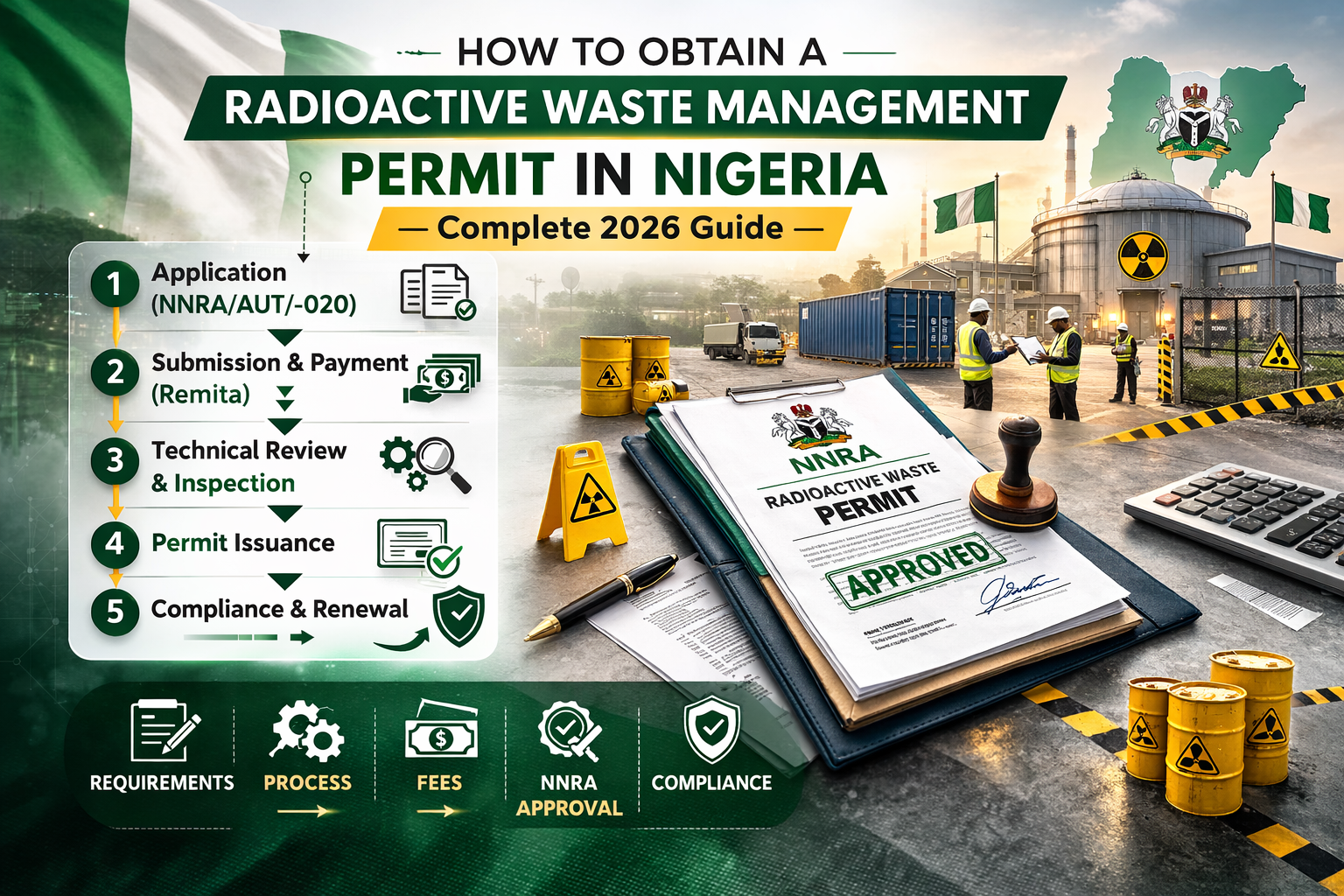
Step-by-Step Process to Obtain a Radioactive Waste Management Permit
Below is a structured, practical process to guide you through obtaining your permit.
Step 1: Pre-Application Preparation
Carefully prepare your internal team and documents:
-
Appoint a Radiation Safety Officer (RSO): A qualified individual responsible for radiation safety at your facility. Revenue requirements for RSOs, including training and qualifications, are addressed in NNRA guidance (e.g., radiation safety adviser criteria).
-
Decide the Scope of Authorisation Needed: Are you registering a premises, storing waste temporarily, or building a full waste management facility? The scope determines the application approach.
-
Compile Organisational Documentation: This includes company registration documents (CAC Certificate, Articles/Memorandum), staff resumes, corporate structure, and safety policies.
Step 2: Complete and Submit the Authorisation Form
-
Download the NNRA Authorisation Application Form (NNRA/AUT/-020). This form is the central document for all NNRA authorisations including waste-related permits.
-
Fill the form accurately and attach supporting documentation. This includes schedules that list radiation sources and activities related to your operations.
-
Follow the Official Guide for Filling the Authorisation Form to avoid submission errors.
-
Submit the completed form either in person at NNRA headquarters or through any dedicated online submission platform if available.
Step 3: Pay Required Fees
NNRA uses the Remita payment platform for all official federal agency revenue matters, including authorisation fees.
To pay:
-
Visit Remita.net.
-
Select Nigeria Nuclear Regulatory Authority as the agency.
-
Choose the appropriate service in connection with your authorisation.
-
Complete the payment using correct details (operator name, contact info).
Fees vary depending on the type of authorisation requested; for waste management facilities versus smaller practice registrations, and should be confirmed on the NNRA fee schedule before application.
Step 4: Administrative Review
After you submit your application and pay required fees:
-
NNRA conducts an initial administrative review to check completeness.
-
If documentation is missing or incomplete, NNRA will request corrections or additional papers.
-
Ensure all forms and attachments are complete to avoid delays.
This review typically takes several weeks, depending on completeness.
Step 5: Technical Evaluation and Inspection
NNRA conducts a technical evaluation, often including:
-
Safety assessments of your facility or proposed facility,
-
Radiation protection program review, and
-
Compliance inspections at your location (if required).
This ensures your facility meets safety standards for radiation protection and waste containment and complies with regulatory requirements.
This phase is the most critical, so ensure your documentation is thorough and technically robust.
Step 6: Permit Decision and Issuance
If the authority is satisfied with your application, NNRA will issue your permit or license with specified conditions including:
-
Reporting requirements,
-
Monitoring and inspection schedules,
-
Renewal obligations,
-
Safety compliance obligations.
If your application is denied or requires modifications, NNRA will provide reasons and guidance on corrective actions.
Step 7: Ongoing Compliance and Renewal
Once issued:
-
Radioactive waste management permits are subject to regular review and compliance.
-
You may be required to renew them periodically based on the license type.
-
Non-compliance can lead to fines, suspension, or revocation.
Regular inspections and reporting are part of permit conditions.
Common Requirements Checklist
Before submission, ensure you have:
- Completed NNRA Authorisation Application Form and schedules.
- Official Guide for filling the form for correct compliance.
- Corporate and compliance documents (CAC documents, RSO details).
- Radiation protection and safety programme documentation.
- Evidence of adequate safety measures (engineered systems, containment).
- Payment receipts from Remita for fees paid.
Official Fees: What You Need to Know
Although the exact fee figures for radioactive waste permits may vary by category and year, NNRA publishes authorisation fee schedules that list the cost of licenses (e.g., registration of premises, licensing of facilities).
Always refer to the 2025 and later versions of the fee schedule on the NNRA resources page to confirm current amounts before submitting payment.
Tip: Fees must be paid through the Remita platform correctly using the authorised agency and payment purpose details.
Estimated Timelines
While timelines vary depending on complexity and responsiveness, typical estimates include:
-
Registration (simple practice or premises): 4–8 weeks
-
Interim waste storage registration: 2–3 months
-
Full waste management facility authorisation (siting → design → commissioning → operation): Many months to over a year (depending on technical review stages)
Delays often arise due to incomplete documentation or insufficient technical evidence.
Frequently Asked Questions
1. Who issues radioactive waste permits in Nigeria?
The Nigerian Nuclear Regulatory Authority (NNRA) issues all radioactive waste management permits and licenses under the Nuclear Safety and Radiation Protection Act.
2. Do I need an RSO for the application?
Yes, NNRA requires a formally designated Radiation Safety Officer with documented qualifications and the authority to enforce radiation safety.
3. How do I pay NNRA authorisation fees?
All payments must be made through the Remita payment system, selecting the correct agency and payment purpose.
4. Is a radioactive waste management permit permanent?
No. Permits typically have specific validity periods and require renewal. Terms vary by license type and conditions set by NNRA.
5. What happens if I operate without a permit?
Operating without required authorisation is unlawful and can attract enforcement actions, including fines, suspension or other regulatory sanctions.
Common Misconceptions
“Only large nuclear facilities need permits.”
Not true. Any facility that uses, stores or manages radioactive materials or generates radioactive waste must register and obtain appropriate authorisation from NNRA.
“Paying a fee guarantees approval.”
No. Fee payment is just one part of the authorisation process. You must provide complete documentation and satisfy technical and safety requirements for approval.
“The process is the same for all facilities.”
Authorisation requirements vary by category which includes, premises registration, storage facility permits, and full waste management facility authorisations have different documentation and technical expectations.
Conclusion
Obtaining a radioactive waste management permit in Nigeria is a rigorous regulatory process designed to protect people and the environment. Successful applicants typically:
-
Prepare thorough documentation,
-
Engage qualified radiation safety professionals,
-
Use official NNRA guidance documents,
-
Pay fees correctly via Remita,
-
Respond promptly to NNRA queries,
-
And maintain compliance after permits are granted.
With careful preparation and adherence to NNRA requirements, the authorisation process becomes efficient and predictable.
